What is School Software?
School software is a digital system that helps educational institutions manage routine work from one place. Instead of handling admissions in one spreadsheet, fee collection in another sheet, attendance in paper registers, and parent communication in separate apps, a school can use one connected platform to manage everything more consistently.
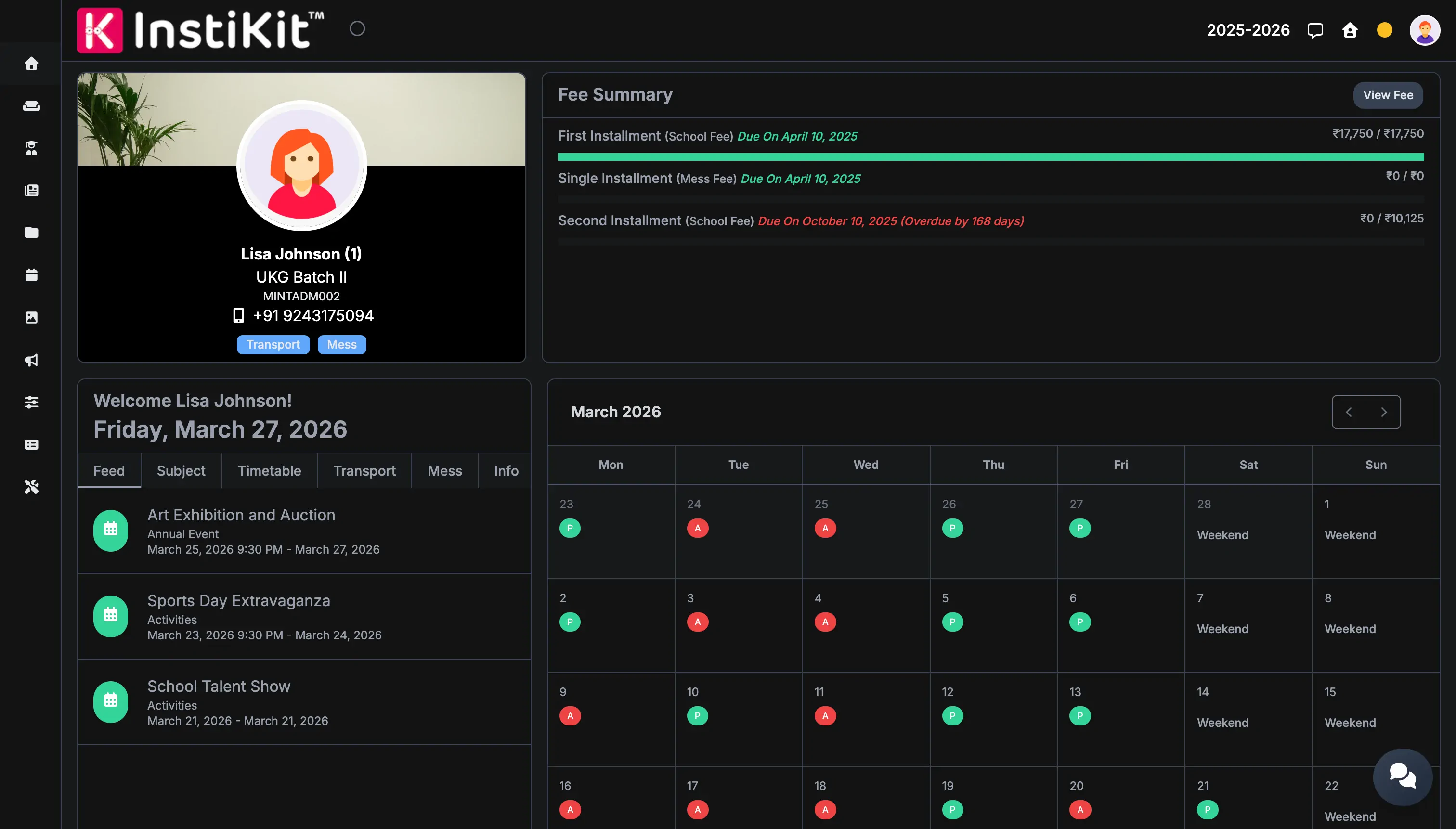
For many institutions, the biggest value of school software is not just automation. It is clarity. A principal can quickly review attendance trends. The accounts team can track pending fees without building manual reports. Teachers can work with a timetable and exam workflow that is easier to follow. Parents can receive updates without waiting for printed notices or fragmented messages.
Modern school software is also expected to support more than basic record keeping. Schools now need tools for communication, mobile access, transport planning, fee tracking, academic reporting, and role-based workflows. That is why many institutions evaluating software today are looking for a platform that can support both present needs and future growth.
InstiKit is designed for that practical reality. It brings together the workflows schools already depend on and makes them easier to manage in one system.
Why Schools Need Modern School Software
Schools have become operationally more complex. Even a mid-sized institution may manage admissions, attendance, fees, transport, exams, notices, staff coordination, and parent engagement every single day. When these processes are handled through disconnected tools, the result is usually delays, duplicated work, and limited visibility.
Manual systems create several common problems:
- Teams spend too much time updating records in multiple places.
- Leadership gets reports late, or only after someone prepares them manually.
- Parents receive inconsistent communication.
- Fee follow-ups become harder to manage at scale.
- Exam and timetable work depends too heavily on individual staff members.
Modern school software helps solve these problems by giving schools one operational backbone. It improves consistency, reduces follow-up effort, and helps each team work with the same source of information.
This matters for growing schools especially. As student strength increases, manual systems do not just become slower. They become riskier. A missed payment update, an incorrect attendance record, or delayed exam result communication can create avoidable friction for both staff and families.
That is why schools looking at features, pricing, and implementation options often start by asking a simple question: can one platform help us run the institution more smoothly every day? Good school software should answer that question with practical workflows, not just a feature list.
What InstiKit Helps You Manage
InstiKit is built to support the major workflows that schools deal with every day. It helps institutions move from scattered administration toward a more structured operating model.
Student management is one of the first areas where schools usually feel the difference. Instead of searching across files and folders, teams can keep admissions data, profiles, guardian records, and academic context in one place. This makes routine administration faster and helps reduce data confusion.
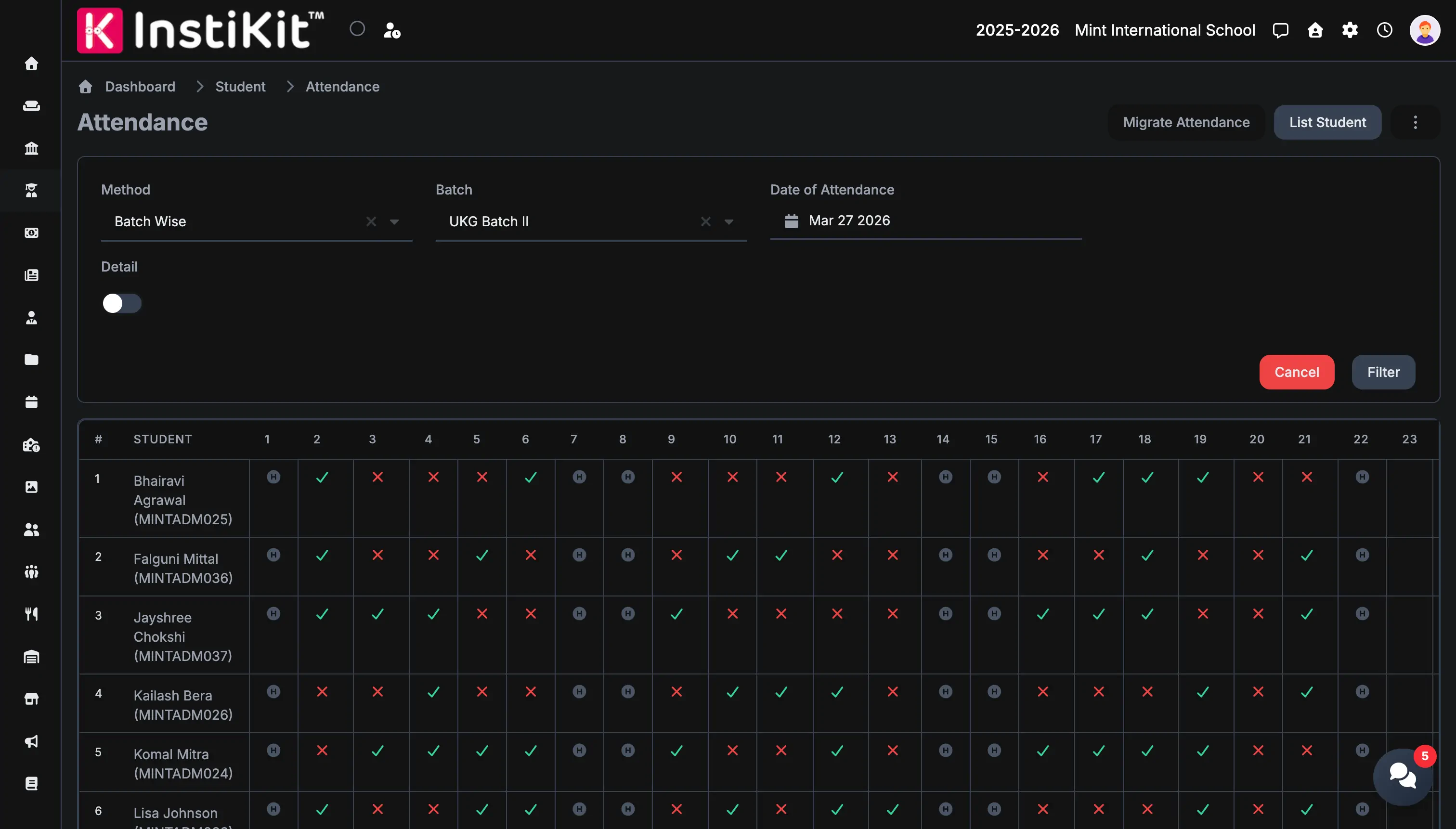
Attendance is another core workflow. A modern school needs accurate daily attendance not just for compliance, but also for parent communication and academic tracking. InstiKit supports attendance workflows that are easier for teachers and administrators to maintain consistently.
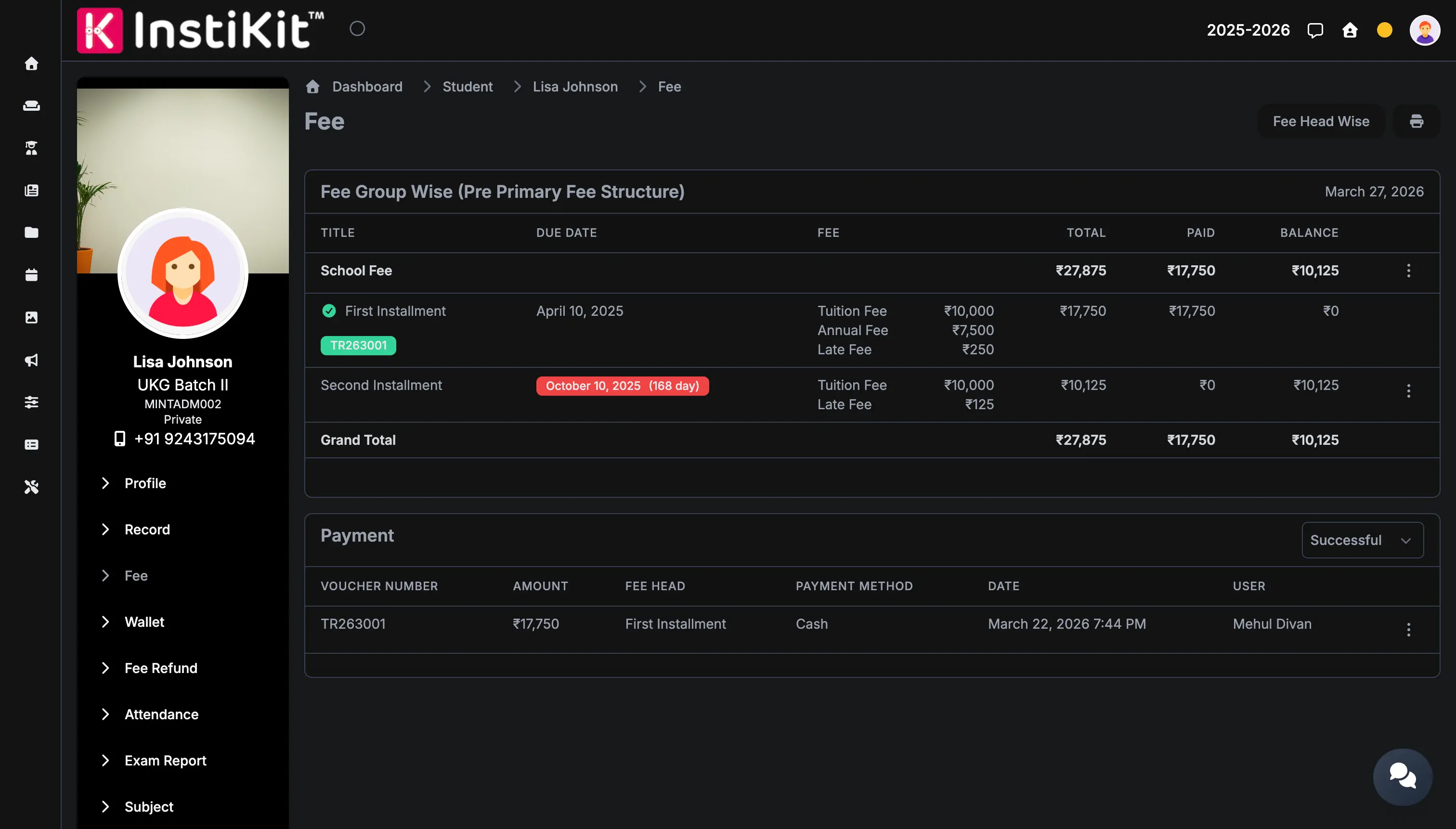
Fee management is equally important. Many institutions struggle with collections because records are distributed across separate processes. With dedicated school fee management workflows, the accounts team can handle structures, receipts, pending dues, and collection visibility more effectively.
Exams and timetable operations also benefit from being connected to the rest of the system. Schools can reduce manual coordination when exam schedules, marks workflows, class planning, and communication are more organized.
Schools reviewing competency assessment can read our NEP 2020 guide for schools for an introduction to Holistic Progress Cards and practical steps for planning assessment records.
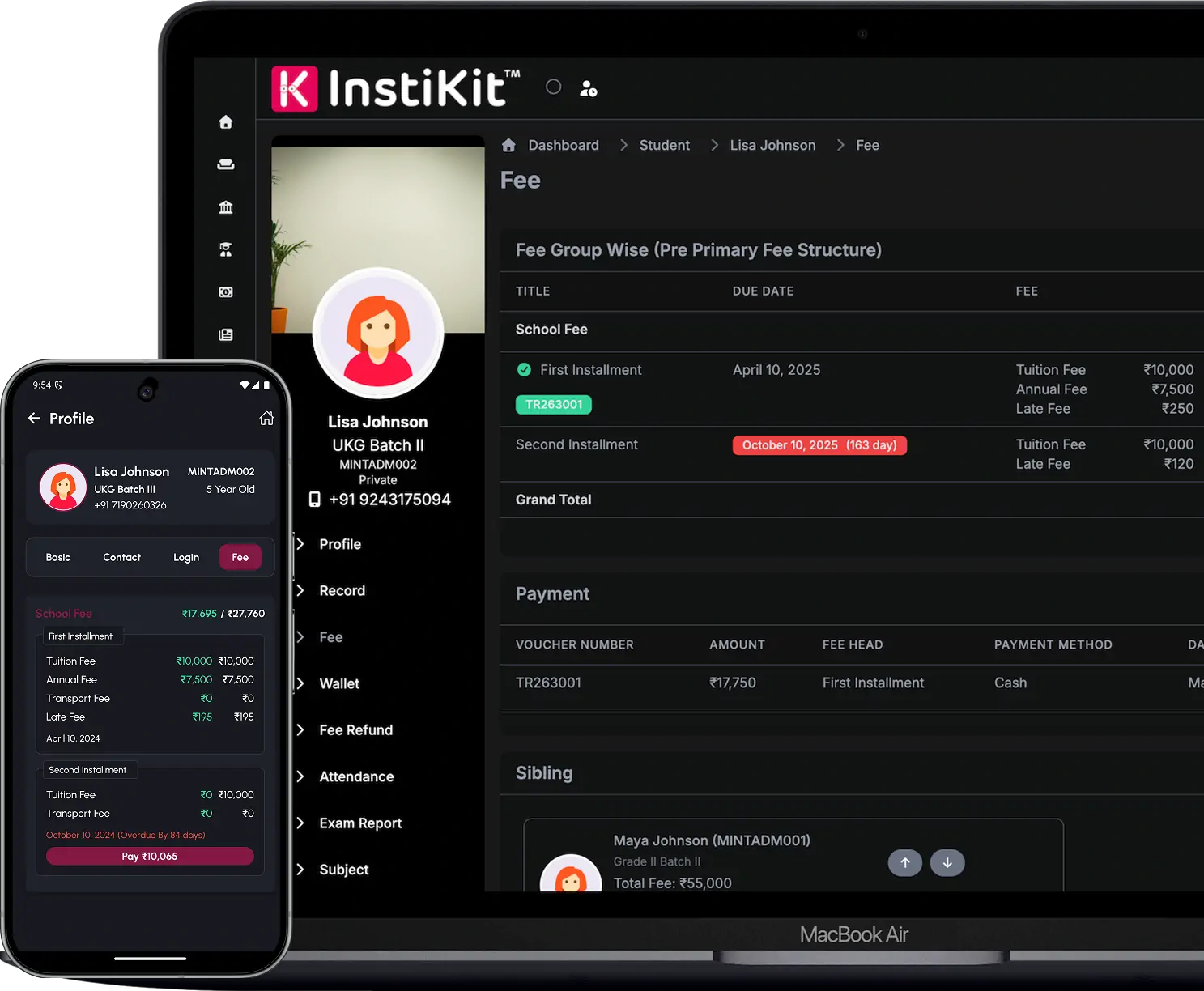
Transport, communication, and mobile app access make the platform more complete. Parents expect timely updates. School leaders need visibility even when they are away from the office. Teachers need structured ways to share information. InstiKit brings these everyday expectations into one operational environment.
If your team is comparing software options or reading case studies in stories, the key question is not whether a system has many modules. It is whether those modules work together in a practical way for real school teams.
Benefits of Using InstiKit School Software
The most immediate benefit of using InstiKit school software is better coordination. When records, communication, and reports sit inside one platform, teams spend less time reconciling information and more time acting on it.
Another major benefit is time savings. Administrative teams often repeat the same tasks across multiple tools because their current setup is fragmented. With school software, that repetition can be reduced. Daily work becomes easier to standardize, especially for admissions, attendance, fees, and notices.
InstiKit also helps schools improve accountability. Since activities happen in a more visible system, leaders can see where work is pending, which processes need attention, and how teams are progressing. This is valuable for both school owners and principals who want clearer oversight without micromanaging every task.
Parent communication also improves. Families want timely information, not delayed updates after a long administrative chain. When schools can manage attendance notifications, notices, reminders, and app-based communication from one platform, the parent experience becomes stronger and more reliable.
There is also a strategic benefit. Good school software creates a foundation for growth. A school that wants to expand programs, improve reporting, or serve more students needs systems that can scale with it. InstiKit is positioned as a practical platform for schools that want that next level of operational maturity without overcomplicating adoption.
To see how InstiKit fits your setup, sign up for a demo or read the blog for more detailed product and implementation guidance.
Who Can Use This School Software?
InstiKit school software is designed for multiple stakeholders inside and around an institution.
School owners and directors can use it to get more confidence in operational reporting. Instead of depending on fragmented updates from different departments, leadership gets a clearer view of collections, attendance, and administrative performance.
Principals and academic coordinators can use it to monitor attendance, timetable execution, exam planning, and school-wide communication. This reduces reliance on informal processes and helps academic operations stay aligned with administrative work.
Administrative staff and finance teams can use the platform for the workflows they handle most often: admissions, records, receipts, dues, notices, and routine coordination. When these teams work inside a structured system, productivity improves and errors become easier to catch.
Teachers benefit when attendance, exam-related processes, and communication are easier to manage. Parents benefit when updates become faster and more consistent. IT partners and ERP resellers benefit when they can recommend a platform with broad school relevance and a clearer operational use case.
That broad usability matters because school software is rarely successful when it only works for one department. The best systems create alignment across the people who actually run the institution.
It also matters during change management. When one system can serve leadership, office staff, finance teams, teachers, and parents with a shared flow of information, rollout becomes easier to justify. Instead of asking every department to adopt a different tool, the institution can work toward one operating model with clearer responsibilities and fewer communication gaps.
Why Choose InstiKit?
Many software products describe themselves as complete, but schools usually need something more specific. They need software that is practical, understandable, and relevant to the way educational institutions actually function.
InstiKit is focused on that practicality. It combines core school workflows in one platform, supports both administrative and academic operations, and gives schools a cleaner path away from fragmented tools. The goal is not to overwhelm teams with complexity. The goal is to help them work with better structure.
Another reason schools choose InstiKit is alignment. The platform is built around common school needs such as student management, fees, attendance, exams, timetable planning, transport, communication, and mobile access. That makes it useful for institutions that want broad operational coverage without stitching together too many disconnected systems.
InstiKit is also a strong fit for organizations that care about adoption. Software only creates value when staff can actually use it. Clear workflows, familiar operational logic, and practical rollout options matter just as much as a long list of modules.
Schools also appreciate being able to evaluate the platform in a way that matches their buying process. Some want to see product depth through modules, others want to understand operational outcomes, and others care most about implementation readiness. InstiKit supports that evaluation with clear product information and a more focused path to the next conversation.
If your institution is evaluating school management software or school ERP software, InstiKit offers a practical place to start the conversation. You can review modules, compare options, and request a guided walkthrough based on your school’s current processes.
Frequently Asked Questions
Schools usually ask similar questions when evaluating a new platform: is it suitable for our size, can our team adopt it easily, can we start with core modules, and how implementation will work. The FAQ section below covers these common decision points so you can evaluate the platform with more confidence before the next step.